
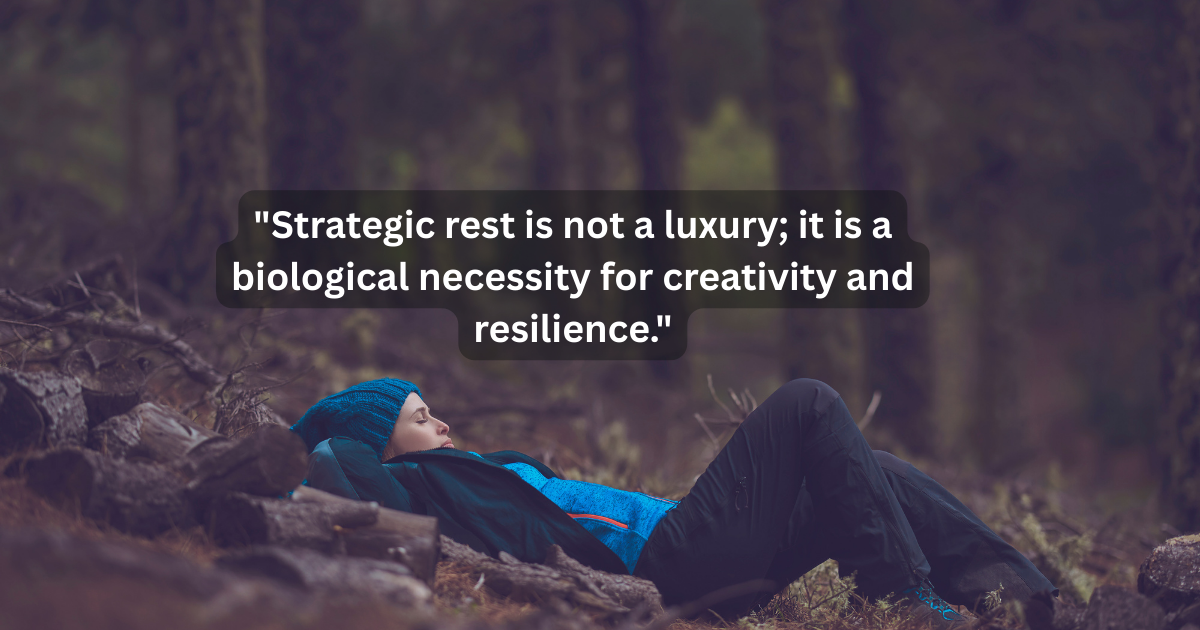
Benefits of Boredom: What if the secret to peak performance isn’t more work, but less?
In the modern world, busyness is often mistaken for productivity. We are conditioned to believe every moment must be optimized.
This constant activity is seen as the only path to success. Yet, a closer look at the natural world and psychological research reveals a surprising truth.
Strategic inactivity is not a flaw, but a sophisticated survival and creative strategy.
This exploration delves into the science of rest and the necessity of downtime. We examine the profound creative power of boredom.
We argue for a mindful re-evaluation of rest. It is not the opposite of work, but its essential partner.
Learn how embracing boredom can boost creative thinking, trigger deep brain activity, and support mental well-being, as Harvard’s Arthur C. Brooks explains why letting your mind wander is a very good thing.
The Sloth’s Secret: Slowing Down to Thrive

The three-toed sloth is the world’s slowest animal, moving at just 30 centimeters per minute [1]. Algae can even grow on its coat due to its extreme slowness.
This might seem like ultimate laziness, but for the sloth, it is a finely tuned evolutionary strategy. By conserving energy, the sloth minimizes its caloric needs.
This allows it to survive on a low-energy diet of leaves and makes it less visible to predators.
The sloth’s existence challenges our human-centric view of efficiency. In a world obsessed with speed, the sloth teaches us a lesson.
Sometimes, the most effective path is the slowest one. This principle of strategic inactivity is vital.
Even the majestic lion, the king of the jungle, spends up to twenty hours a day sleeping or lounging [2].
In the wild, where every calorie counts, energy conservation is paramount.
The Biology of the World’s Slowest Mover
The sloth’s slow metabolism is a masterclass in energy management. Its low body temperature and slow digestion are key.
It can take weeks for a single meal to be processed. This biological reality dictates a life of minimal movement.
For the sloth, doing nothing is not a choice; it is a necessity that ensures survival.
This natural mandate for rest is a powerful reminder that our own bodies and minds have limits.
Pushing past these limits leads not to greater output, but to burnout and diminished returns.
Strategic Inactivity in the Wild
Beyond the sloth, many animals employ periods of deep rest or minimal activity. This maximizes their overall effectiveness.
This is not simple idleness, but a calculated response to environmental demands. It is the natural world’s strategic pause.
This moment of recovery allows for a burst of necessary activity when the time is right.
The Ant Colony Conundrum: Inactivity as a Survival Strategy
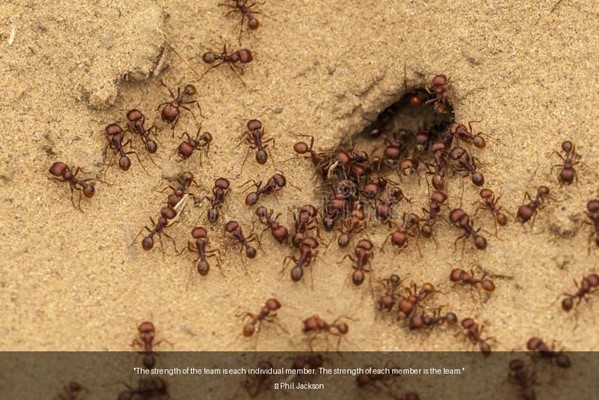
The ant is the ultimate symbol of relentless industry. The phrase “busy as a bee” is often interchangeable with “industrious as an ant.”
We imagine tiny, tireless workers building, foraging, and maintaining their complex colony. This perception, however, is largely a myth.
Research into ant colonies, such as the rock ant (Temnothorax rugatulus), reveals a startling fact [3].
At any given time, roughly half the colony is inactive. Why would a species known for its work ethic allow so many members to sit motionless?
The Myth of the Industrious Ant
The inactive ants are not necessarily lazy; they are a reserve force.
One theory suggests these ants are a vital backup system, ready to step in should disaster strike the colony [4].
This could be a sudden attack, a disease outbreak, or a structural collapse. A pool of fresh, rested workers is a critical insurance policy.
This biological redundancy offers a profound lesson for human organizations. In our pursuit of 100% utilization, we eliminate all slack.
This leaves no margin for error, innovation, or crisis response.
The ant colony demonstrates that a healthy, resilient system requires a degree of planned inefficiency.
The Reserve Force Theory
The existence of a reserve force ensures the long-term stability of the colony. If every ant worked constantly, the colony would be highly vulnerable to sudden shocks.
The inactive ants preserve their energy and avoid exposure to pathogens. They represent a vital resource for the colony’s future.
They are not contributing to the immediate task, but they are contributing to the overall resilience and longevity of the group.
Boredom: The Unsung Mother of Invention

If strategic rest is a biological imperative, then boredom is its psychological counterpart.
Psychologist Dr. Sandi Mann argues that the modern obsession with being “productive” is often overrated [5].
In our world of constant stimulation, we have come to fear boredom. We fill every spare moment with scrolling and swiping.
Yet, Dr. Mann suggests that this avoidance of boredom is counterproductive. The unpleasant state of boredom is a necessary catalyst for creativity.
Read Also: How Gratitude Can Change Your Life: A Simple Guide to Profound Happiness
The Overrated Nature of Constant Productivity
The human brain, when constantly engaged, operates in a reactive mode. It processes external stimuli.
When we allow ourselves to be bored, the brain shifts into the Default Mode Network (DMN) [6].
This state is associated with introspection, memory retrieval, and creative problem-solving.
This is the mental space where disparate ideas connect and true innovation is born.
By constantly seeking external stimulation, we deny our DMN the time it needs to synthesize information.
The paradox is clear: to be truly productive, we must allow for periods of unproductive thought.
Read Also: River as a Metaphor for Life
From Fire to Philosophy: How Downtime Fuels Creativity
Dr. Mann asks a compelling question: Would humans have invented fire, bread, or beer if they hadn’t been bored [5]?
The famous proverb, “Necessity is the mother of invention,” suggests need drives innovation.
However, boredom acts as the “mother of curiosity,” which is the engine that drives the inventor.
Boredom forces the mind inward, prompting it to create its own stimulation. This internal search for novelty is the wellspring of human ingenuity.
It is the quiet space between tasks where the mind, free from the tyranny of the to-do list, can finally wander.
Switching Off: A Practical Guide to Mindful Downtime

The challenge for the modern human is not just accepting the value of rest. It is actively practicing the art of switching off.
This means stopping the worrying, silencing the internal monologue, and relaxing completely.
Read Also: Life Awakening: Mindful Living Journey
The Modern Stimulation Trap
We live in an era of unprecedented cognitive load. The constant stream of notifications has created a state of perpetual low-level stress.
This stimulation trap makes it harder than ever to achieve true mental rest. We have become addicted to novelty.
The moment external input stops, we reflexively reach for a device to fill the void.
To break this cycle, we must intentionally create boundaries around our attention.
We must schedule downtime with the same rigor we schedule meetings. Rest is a critical component of our work.
Read Also: Mindless Scrolling: Break the Cycle & Reclaim Your Focus
Reclaiming Your Cognitive Space
Reclaiming your cognitive space involves embracing activities that allow the mind to drift without a specific goal.
This could be a simple walk without a podcast, sitting quietly without a phone, or engaging in a low-stakes task.
The goal is to allow the mind to enter that DMN state, where the seeds of creativity can be sown.
The lessons from nature are clear: resilience comes from reserve, and innovation comes from introspection.
By learning to value the pause, we can unlock a deeper, more sustainable form of productivity.
Conclusion: Redefining “Doing Nothing”
The journey from the three-toed sloth to the innovative human mind reveals a consistent pattern.
Rest is not the absence of work, but the foundation upon which meaningful work is built.
The “value of doing nothing” is not a call to absolute idleness. It is a sophisticated argument for strategic rest, mindful downtime, and the cultivation of boredom.
Constant, frantic activity is often a sign of poor strategy, not high performance.
By incorporating periods of deliberate “switching off,” we honor our biological need for recovery.
We enhance our cognitive resilience and create the necessary mental space for the next great invention to emerge.
In the end, the most productive thing you can do today might just be to sit down, close your eyes, and allow yourself to do nothing at all.
References
[1] BBC (2024). Why ‘doing nothing, intentionally’ is good for us: The rise of the slow living movement
[2]Animal Facts – The Lion Habitat Ranch. (2023, September 26). The Lion Habitat Ranch. https://lionhabitatranch.org/about/lion-facts/?srsltid=AfmBOoouqYeJdFMSX7N0o5jJ4A71rBRKiPuYKH7gBie9ULW6cN_TM7EH
[3] Lazy workers are necessary for long-term sustainability in insect societies
[4] Lazy Ants
[5]Swagata B. (2026, January 21). The Science of Doing Nothing: Why Boredom Is Essential for a Healthy Body & Mind – Medix Global. Medix Global. https://medix-global.com/the-science-of-doing-nothing-why-boredom-is-essential-for-a-healthy-body-mind/
[6] Raichle, M. E. (2015).The brain’s default mode network. Annual Review of Neuroscience, 38, 433-447. [Placeholder for a link to a reliable source on the Default Mode Network].